
AI Humanizers Now Beat AI Detectors, NYT Reports (2026)
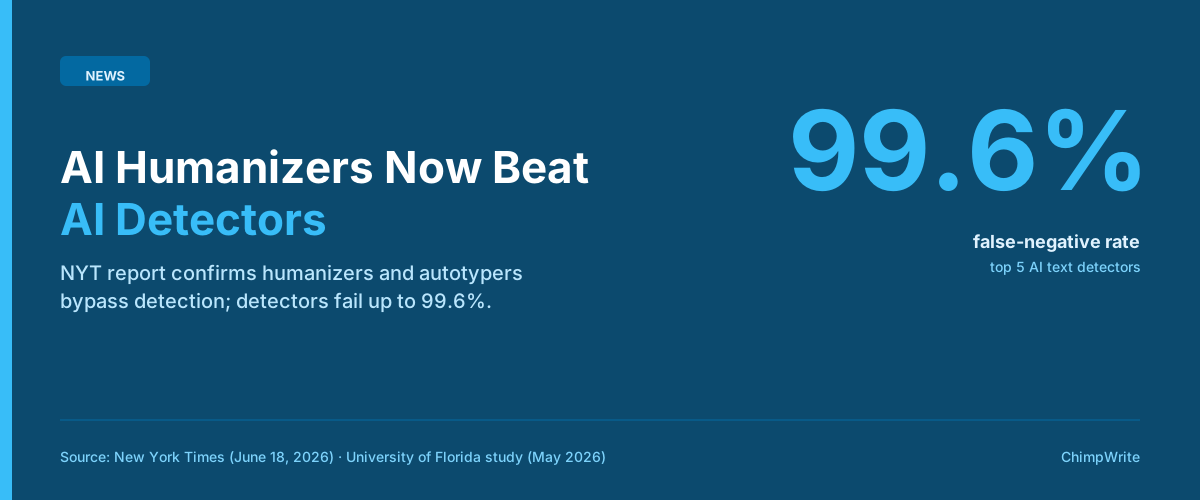
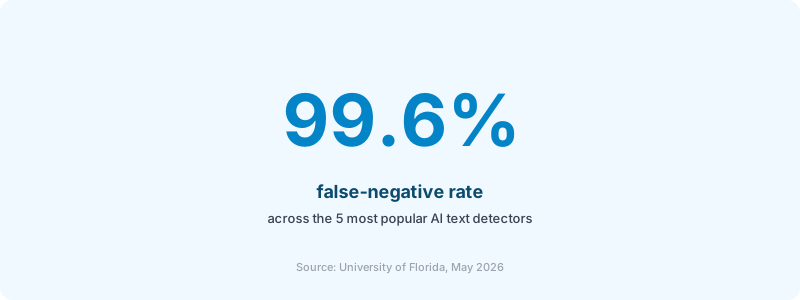
AI humanizers and a newer category of tools called autotypers now reliably bypass AI detectors, and the detectors themselves fail often enough that schools cannot trust detector scores for disciplinary decisions. A June 18, 2026 New York Times report (covered in detail by Digital Trends) found that cheating tools are evolving faster than the software meant to catch AI writing. A University of Florida study cited in the report found false negative rates as high as 99.6 percent across the five most popular AI text detectors.
TL;DR
AI humanizers and autotypers now bypass AI detectors, and AI detectors are too unreliable (up to 99.6% false negatives, up to 68.6% false positives) to use as the basis for academic discipline. Humanizing AI content for readability and SEO is legitimate; using these tools to deceive an instructor is not. Schools should move from detection-based enforcement to process-based assessment.
Key Takeaways
| Topic | Finding | Source |
|---|---|---|
| Do humanizers bypass detectors? | Yes; the gap that exposed AI writing has closed | NYT, June 2026 |
| Detector false-negative rate | Up to 99.6% across the top 5 detectors | University of Florida study |
| Detector false-positive rate | Up to 68.6% in the same study | University of Florida study |
| New tool category | Autotypers defeat version-history checks, not text detection | NYT, June 2026 |
| Legitimate use of humanizers | Readability and SEO for professional content | ChimpWrite analysis |
What the NYT Report Actually Found
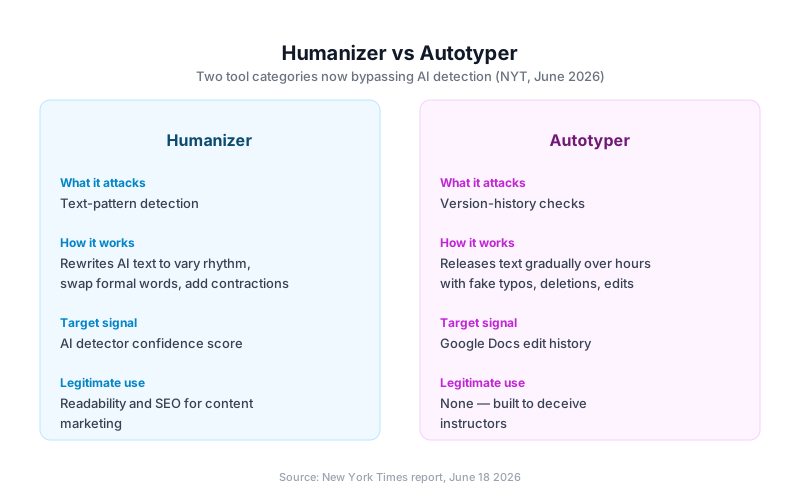
The NYT report documents two categories of tools now marketed to students on TikTok and YouTube. Humanizers and autotypers attack different signals, and the difference matters for anyone trying to understand why detection is failing.
| Tool type | What it attacks | How it works |
|---|---|---|
| Humanizer | Text-pattern detection | Rewrites AI text to vary sentence rhythm, swap formal vocabulary, add contractions, and remove robotic patterns |
| Autotyper | Version-history checks | Releases AI text gradually over hours with fake typos, deletions, and edits to mimic a real writing session |
Humanizers take AI-generated text and rework it so it no longer sounds robotic or repetitive enough to trigger detection. This is the category this site has been reviewing and testing for two years. Autotypers solve a different problem: instead of a finished essay appearing in a document all at once, an autotyper releases the text gradually over hours and inserts fake typos, deletions, and edits to mimic a real writing session. The target is not the AI detector but the version-history check a teacher runs in Google Docs.
Named apps in the report include Dripwriter and Duey.ai, both of which advertise that students can step away entirely and still submit something that looks self-written. A third app, Typeflo, promised students they could “relax and eat a sandwich” while it produced their essay. Typeflo turned out to be built and marketed by the teenage son of an Emory University professor, who told the Times he had not known the extent of its social media presence and pulled the app down after being contacted.
| App | What it does | Status as of June 2026 |
|---|---|---|
| Dripwriter | Autotyper; alters Google Docs version history | Live and advertising to students |
| Duey.ai | Autotyper; mimics self-written submissions | Live and advertising to students |
| Typeflo | Autotyper; marketed with “eat a sandwich” pitch | Pulled down by its builder after NYT contact |
How AI Humanizers Work, and Why Detectors Cannot Keep Up
An AI humanizer rewrites AI-generated text to remove the patterns detectors look for. AI text tends to have uniform sentence length, formal phrasing, predictable structure, and overused transition words. Humanizers vary sentence rhythm, swap formal vocabulary for natural alternatives, add contractions, and introduce the small imperfections that characterize real human writing. For a full breakdown, see our complete guide to what an AI humanizer is.
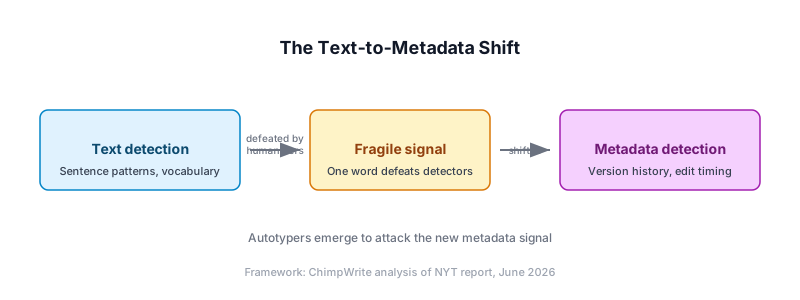
Detectors cannot keep up because the signal they rely on is fragile. The University of Florida researchers found that a single vocabulary tweak defeats most of the five most popular detectors entirely. When a one-word substitution drops a detector's confidence from “AI-generated” to “human,” the detector is not measuring authorship in a robust way. Autotypers make the problem worse by attacking the metadata teachers use as a backup signal, such as document version history.
The Detector Side Is Compromised Too
The NYT report also found that the companies selling detection software are entangled in the same market. GPTZero, whose pitch rests on catching AI writing that other tools miss, had a marketer paid by the company run a fake graduate teaching assistant persona on TikTok to promote the tool to students. The videos walked students through GPTZero's browser extension, showing them how to screen a paper for AI flags before submitting it, and revealed that the same tool could generate a full paper with citations from scratch.
GPTZero co-founder and CEO Edward Tian told the Times the company has cut ties with the marketer and is reconsidering whether to keep the paper-generating capability. Grammarly faces the same contradiction: the platform sells an authorship checker for teachers while also offering a humanizer, text generation, and paraphrasing on the same site. The conflict is structural, not unique to either company.
Are AI Detectors Accurate Enough for School Discipline?
No. The Florida study's 99.6 percent false negative rate means detectors miss most AI-written text, and the same study found false positive rates up to 68.6 percent, which is the more damaging failure mode for students because it produces a false accusation. A detector score is a weak signal, not proof.
| Finding | Result | Implication |
|---|---|---|
| False negative rate (top 5 detectors) | Up to 99.6% | Detectors miss most AI-written text |
| False positive rate (same study) | Up to 68.6% | Detectors frequently flag human writing as AI |
| Single vocabulary tweak | Defeats most detectors entirely | Detection signal is fragile, not robust |
| Detectors tested | 5 most popular commercial detectors | Findings cover the tools schools actually use |
Schools that treat detector output as the basis for academic disciplinary decisions are working with far less certainty than the scores imply. Outlawing AI in classrooms is hard to enforce when the enforcement tool itself is unreliable.
Is Using an AI Humanizer Cheating?
Using an AI humanizer for schoolwork is cheating when the institution prohibits submitting AI-generated work as your own. In that context, using a humanizer or autotyper to hide AI use is academic misconduct. The autotyper category exists specifically to deceive instructors, and no responsible reviewer can endorse that use.
The legitimate use case for AI humanizers is professional and commercial writing. Content marketers, bloggers, and SEO writers use AI for first drafts and then humanize the output so it reads naturally and meets publisher quality standards. That workflow is accepted, and it is what our own free AI text humanizer is built for. The ethical line is deception: humanizing to improve readability is sound; humanizing to defraud an evaluator is not.
How to Use AI Humanizers the Right Way
The responsible workflow pairs a detector with a humanizer and keeps a human in charge of the output. We document the full process in our AI detector and humanizer workflow guide, but the short version is:
- Start with a high-quality AI draft. Fix facts, structure, and completeness before humanizing. Garbage in, garbage out.
- Check your baseline AI score with a detector such as GPTZero so you know what you are working against.
- Humanize for readability, not for deception. Use medium humanization for most content and review every change.
- Re-check the score to confirm it dropped, then read the output to confirm meaning and quality are preserved.
- Disclose AI assistance where your publisher, employer, or audience expects it.
For tool selection, our tested rankings live in the best free AI humanizer tools list and the free AI humanizer comparison. If you want an all-in-one tool that checks and rewrites in one place, see our AI detector and humanizer combo rankings.
What Schools and Workplaces Should Do Now
Schools and workplaces should shift from detection-based enforcement to process-based assessment, because detector accuracy is too low to support disciplinary decisions on its own. The approaches that still work for schools are oral defenses, in-class writing, structured draft reviews, and clear AI-disclosure policies. A detector score should trigger a follow-up conversation, not a verdict.
Employers face a different calculation. Most knowledge workers will use AI tools on the job, so workplace policy is better served by quality standards and disclosure norms than by policing whether AI was involved. The relevant question for a deliverable is whether it is accurate, useful, and original enough to publish, not whether a detector flags it.
What This Means for the AI Humanizer Market
The AI humanizer market will keep consolidating around detector-plus-humanizer combo tools, because the same vendors are already selling both sides and demand for humanizers is growing as detection stays unreliable. The NYT report confirms this market reality, and that demand pulls in both legitimate and abusive use cases. Expect two trends to accelerate through the rest of 2026.
- Detector and humanizer combo tools will keep consolidating, because the same vendors are already selling both sides. Grammarly and GPTZero are examples of the conflict the Times identified.
- The Text-to-Metadata Shift describes the move from text-level detection to metadata detection. Because text-level signals are too weak (a single vocabulary tweak defeats most detectors), detection is shifting to metadata like document version history. Autotypers exist precisely because version history is now the harder signal to fake. This framework explains why autotypers emerged and why the next wave of detection will target writing process, not writing output.
For buyers, the practical takeaway is to evaluate humanizers on output quality and meaning preservation, not on a single bypass-rate number. On that basis our recommended pick is ChimpWrite, whose Authentic Voice mode preserves your own writing rhythm and whose before/after scorecard spans five detectors. Our Undetectable AI review and QuillBot AI humanizer review cover the two tools most readers ask about, and the Undetectable AI alternatives list covers the rest of the field.
Bottom Line
The NYT report is not really news to anyone testing these tools. AI humanizers bypass AI detectors, autotypers defeat version-history checks, and detectors fail often enough that no school should treat a detector score as proof of anything. The honest position for the humanizer category is the same one this site has held: humanizing AI content for readability and SEO is legitimate, using these tools to defraud an instructor is not, and detection is too unreliable to be the enforcement mechanism schools wish it were.
If you humanize AI content for legitimate work, try our free AI text humanizer for up to 500 words, no signup required. For choosing a paid tool, start with the AI humanizer reviews and the tool comparisons.
ChimpWrite Team
ChimpWrite Teamhas tested 25+ AI humanizer tools across GPTZero, Turnitin, Grammarly, and Originality.ai. Every review is based on hands-on testing with real AI-generated content — no sponsored rankings. See our testing methodology and editorial standards.